 STD Tests Dubai
Practical questions
HIV self-tests: reading time and detection window differ
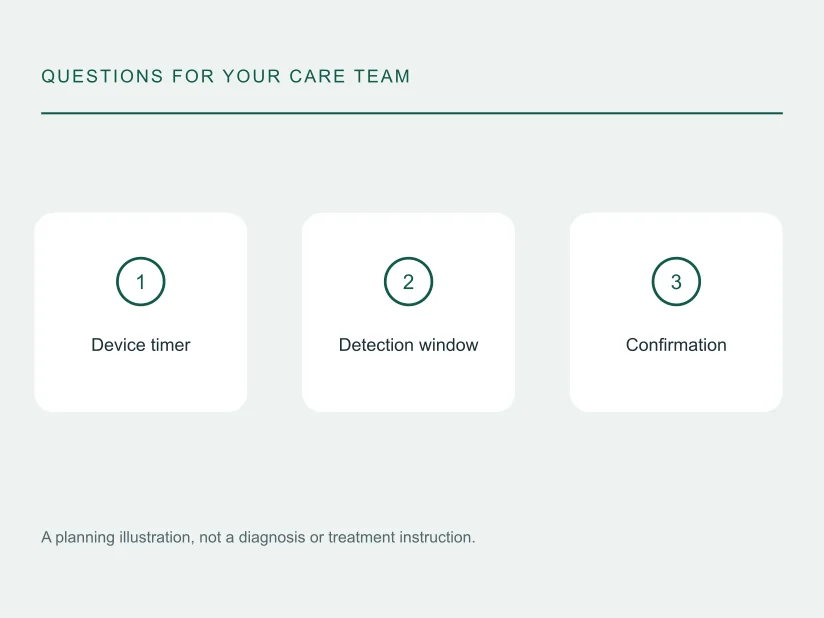
An HIV self-test has two different timing questions: when to read the device after starting it, and how long after an exposure it can detect infection. These are not the same window. A correctly timed reading today cannot make a test detect an infection earlier than its biological detection capability.
General information for adults. Not a substitute for medical assessment.
Follow the instructions for that exact device
Read the supplied instructions before opening the kit and check expiry, damage and required specimen. Use its stated reading interval and control indicator; do not borrow the number of minutes or line-and-dot interpretation from another product. Different devices can use different formats. If the result is invalid, the test did not work and is not a negative result. Ask for another appropriate test or help from a healthcare service rather than interpreting a photograph taken much later.
Source: CDC: HIV self-tests, confirmation and detection windows · FDA: an example of device-specific HIV self-test instructions
Discuss exposure timing separately
No HIV test detects infection immediately after exposure, and detection windows depend on test type. A self-test may not be the appropriate tool for a recent exposure or during particular preventive or treatment medicines. Tell the clinician about dates and any HIV-related medicine rather than choosing a repeat date from a generic online answer. A recent potentially significant exposure needs urgent medical assessment; do not wait for a self-test to turn positive before asking about time-sensitive prevention.
Source: CDC: HIV self-tests, confirmation and detection windows
Know what each result requires next
A reactive self-test needs confirmatory clinical testing; it is not the final diagnosis by itself. A negative result needs interpretation with the test type, exposure timing and any further exposures. Do not keep re-reading a dried device or use it to certify a partner’s status. Record the kit name and time of reading if asking for help, and confirm a suitable clinical route without assuming that a device authorised abroad is locally supplied or approved.
Source: CDC: HIV self-tests, confirmation and detection windows
Common questions
Is the reading interval the detection window?
No. Device timing and time since exposure are different questions.
Does invalid mean negative?
No. It means the test did not produce a usable result.
Is a reactive self-test the final diagnosis?
No. Seek confirmatory testing through an appropriate healthcare service.
Sources and information limits
Sources support general medical principles, not Dubai booking policies or service availability. Confirm instructions and local arrangements with the care provider. The update date does not claim clinician review.
- CDC: HIV self-tests, confirmation and detection windows
- FDA: an example of device-specific HIV self-test instructions
Questions before arranging an appointment?
Enquire about the next steps and availability. An enquiry does not confirm a booking or diagnosis and is not an emergency service.